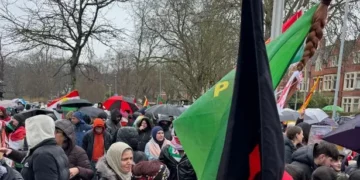
The Israeli-Palestinian conflict has been ongoing for decades, with both sides struggling to find a resolution. However, in recent weeks, there has been a concerning development that has further exacerbated the situation. The Israeli military buffer zone, a designated area of land where Palestinians are not allowed to enter without permission, has doubled in size. This has resulted in Palestinians being squeezed into shrinking wedges of land, causing great distress and concern.
The buffer zone, also known as the “no-go zone” or the “forbidden area,” is a strip of land that runs along the border of Gaza and Israel. It was established by the Israeli military in 2005, following the withdrawal of Israeli settlements from Gaza. The purpose of the buffer zone was to create a secure area to protect Israeli communities from attacks by Palestinian militants. However, over the years, the buffer zone has expanded significantly, causing great hardship for the Palestinian residents living in its vicinity.
The recent increase in the size of the buffer zone has had a devastating impact on the lives of Palestinians. Many families have been forced to leave their homes, and their land has been confiscated without any compensation. This has resulted in a severe shortage of housing and agricultural land, leaving the affected families struggling to make ends meet. The buffer zone has also cut off access to essential services, such as schools and health facilities, making life even more difficult for the already marginalized Palestinian population.
The expansion of the buffer zone has also had a significant impact on the livelihoods of Palestinians living in the area. Many of them rely on agriculture as their main source of income, but with their land now falling within the buffer zone, they are no longer able to cultivate their crops or raise their livestock. This has led to a sharp decline in their income, pushing them further into poverty. The buffer zone has effectively become a barrier to economic development and has exacerbated the already dire humanitarian situation in Gaza.
Moreover, the buffer zone has also restricted the movement of Palestinians, making it difficult for them to access other parts of Gaza. This has had a severe impact on the social and cultural life of the Palestinian community. Families have been separated, and students have been unable to attend universities outside the buffer zone, limiting their educational opportunities. The buffer zone has effectively isolated the Palestinian population, further deepening their sense of despair and hopelessness.
The recent expansion of the buffer zone has been met with strong condemnation from the international community. The United Nations has expressed its concern over the displacement of Palestinians and the violation of their human rights. The UN Special Coordinator for the Middle East Peace Process, Nickolay Mladenov, has urged Israel to stop the expansion of the buffer zone and to respect the rights of the Palestinian population.
The Israeli government has defended the expansion of the buffer zone, stating that it is necessary for the security of its citizens. However, it is essential to find a balance between security concerns and the rights of the Palestinian people. The current situation is not sustainable and will only lead to further suffering for the already vulnerable Palestinian community.
It is time for a peaceful and just resolution to the Israeli-Palestinian conflict. The expansion of the buffer zone only adds fuel to the fire and hinders any progress towards peace. The international community must continue to put pressure on both sides to find a solution that respects the rights and aspirations of both the Israeli and Palestinian people.
In conclusion, the recent doubling of the Israeli military buffer zone has had a devastating impact on the lives of Palestinians. It has resulted in the displacement of families, the loss of livelihoods, and the restriction of movement, further exacerbating the already dire situation in Gaza. It is crucial for all parties involved to work towards finding a peaceful resolution to the conflict and to ensure that the rights of the Palestinian people are respected. Only then can we hope for a better future for both Israelis and Palestinians.