Bank of England's Cautious Rate Hike May Prolong High Interest Rates
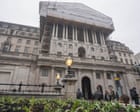
Central Bank's Cautious Approach Raises Concerns
The Bank of England's measured response to inflationary pressures is generating significant concern among economic experts, with leading analysts warning that elevated interest rates may remain a fixture of the UK economy for an extended period. The National Institute of Economic and Social Research (Niesr), a prominent independent research organization, has issued a critical assessment of the central bank's recent policy decisions, suggesting that the institution's conservative approach to rate adjustments could ultimately necessitate sustained higher interest rates.
Niesr's Stark Warning on Inflation Persistence
The influential thinktank delivered a forceful critique following the Bank of England's latest rate decision, characterizing the increase as insufficiently aggressive to combat rising price pressures across the economy. According to Niesr's analysis, the timid nature of last week's rate increase represents a missed opportunity to address inflation more decisively. The research organization contends that this cautious stance may result in inflation remaining stubbornly above the Bank of England's established 2% target threshold well into 2030.
Long-Term Economic Implications
The consequences of prolonged inflation above target levels extend far beyond temporary price fluctuations. If Niesr's projections prove accurate, households and businesses will face an extended period of elevated borrowing costs, reduced purchasing power, and economic uncertainty. The Bank of England's current trajectory suggests that rather than achieving a swift return to price stability, the central bank may be inadvertently setting the stage for a protracted battle against inflationary forces.
Understanding the Policy Dilemma
The Bank of England faces an inherently complex challenge when calibrating monetary policy. Policymakers must balance multiple competing objectives: controlling inflation, supporting economic growth, and maintaining financial stability. The institution's recent hesitant approach reflects the delicate nature of this balancing act. However, Niesr's assessment suggests that the current strategy may be prioritizing short-term economic considerations at the expense of long-term price stability.
Expert Analysis on Rate Decision Impact
Economic experts emphasize that the magnitude and timing of interest rate adjustments carry profound implications for inflation dynamics. When central banks respond too cautiously to emerging inflation pressures, expectations can become unanchored, making subsequent price corrections more difficult and costly. Niesr's warning essentially argues that the Bank of England's measured approach risks creating precisely this scenario, where inflation expectations become embedded in wage and pricing behavior, necessitating even more dramatic future rate increases.
The 2% Target and Beyond
The Bank of England established a 2% inflation target as its primary objective, representing a balance between price stability and economic flexibility. Recent developments have pushed inflation substantially above this level, creating urgency for corrective action. The timid rate increase implemented last week—described by Niesr as insufficient—appears to underscore growing debate within policymaking circles regarding the appropriate pace of monetary tightening.
Comparative Analysis with Other Central Banks
Global monetary authorities have adopted varying approaches to inflation management, with some institutions implementing more aggressive rate-hiking cycles than the Bank of England. These different strategies will likely produce divergent outcomes, with implications for relative economic performance across jurisdictions. Niesr's critique implicitly suggests that the Bank of England may be falling behind in its inflation-fighting efforts compared to peer institutions.
Implications for Households and Businesses
The prospect of sustained higher interest rates carries tangible consequences for UK households and businesses. Mortgage holders face extended periods of elevated borrowing costs, while corporate investment decisions become more constrained by higher financing expenses. Consumer spending may weaken as purchasing power erodes and debt servicing becomes more expensive. These dynamics create a challenging environment for economic growth alongside persistent inflation concerns.
Looking Forward: Policy Challenges Ahead
The Bank of England faces mounting pressure to demonstrate its commitment to price stability. Niesr's analysis suggests that continued hesitation in rate-setting could undermine the institution's credibility, potentially complicating future inflation-control efforts. As policymakers navigate the coming months and years, the central bank must weigh the thinktank's warnings against other economic considerations, ultimately determining whether more aggressive monetary tightening becomes necessary.