Burnham Cites Brexit and Thatcher for UK Economic Decline
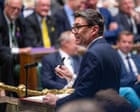
Burnham's First Commons Address Addresses Decades of Political Missteps
Prime Minister Andy Burnham has attributed the United Kingdom's sluggish economic performance over the past decade to the combined consequences of Brexit and the Thatcher era, during his inaugural parliamentary appearance since assuming office six weeks ago. Burnham Brexit and Thatcher policies, he contended, represent critical junctures where Britain veered off course, requiring a candid reassessment of four decades of national governance. Speaking to Members of Parliament, the Prime Minister emphasized that acknowledging these historical errors is essential for establishing a foundation of optimism necessary to reverse current economic trends.
Building Consensus for Economic Recovery
During his first Commons speech as Prime Minister, Burnham articulated a vision centered on transforming public sentiment regarding the nation's economic prospects. He explicitly stated that contemporary Britain must confront uncomfortable truths about policy decisions spanning the last four decades, asserting that such honesty represents the preliminary step toward meaningful reform. The Prime Minister's remarks reflected a determination to distance his administration from the economic approaches of previous governments, positioning his leadership as a definitive break from policies he views as fundamentally flawed.
Defence Spending Commitments and Military Readiness
In a significant strategic announcement, Burnham indicated his government's intention to allocate 3% of the nation's Gross Domestic Product toward defence expenditure by 2030. This commitment underscores his administration's prioritization of military capability and national security. The Prime Minister specifically cited the appointment of John Healey as Chancellor of the Exchequer, emphasizing that this selection was deliberately made owing to Healey's established record regarding military spending priorities. This decision signals that budgetary allocations for defence will receive appropriate consideration and resource allocation within the broader government spending framework.
Water Industry Renationalization Prospects
Addressing the chronic underperformance of Britain's privatized water sector, Burnham indicated openness to exploring renationalization as a potential solution. Characterizing the industry as "a leaking monument to the failures of privatisation," the Prime Minister committed to examining "all possible solutions" for rectifying systemic inefficiencies. This statement suggests that his government will conduct comprehensive reviews of privatization policies implemented decades ago, particularly those affecting essential public services. The water industry's persistent infrastructure deficiencies and service quality issues have prompted serious reconsideration of the original decision to privatize these critical utilities.
Electoral Reform and Democratic Renewal
The Prime Minister opened diplomatic channels regarding potential electoral system reform, suggesting that Labour's forthcoming manifesto may incorporate commitments toward democratic restructuring. Burnham acknowledged the necessity of achieving parliamentary consensus before implementing substantive electoral changes, demonstrating awareness that such constitutional matters require broad political agreement. He outlined a pathway whereby electoral reform could be advanced if sufficient consensus emerges during the subsequent general election campaign, followed by implementation within the following parliamentary session.
Environmental Commitment with Pragmatic Energy Solutions
Burnham reaffirmed his government's dedication to environmental objectives and announced his attendance at the Cop31 climate summit scheduled for Turkey. While maintaining commitment to renewable energy expansion, he emphasized the necessity of pragmatic approaches to energy supply challenges. The Prime Minister's remarks suggested receptiveness toward approving the controversial Jackdaw gasfield project, reflecting a balanced perspective that rejects binary ideological positions on energy policy. He articulated that effective energy strategy requires simultaneous advancement of both renewable sources and conventional energy infrastructure, challenging purists on either side of the environmental debate.
Perspective on Governing Philosophy
The Prime Minister's comprehensive Commons address revealed an administration intent on correcting what it perceives as fundamental policy errors accumulated over recent decades. By explicitly identifying Brexit and Thatcher-era policies as contributing factors to contemporary economic challenges, Burnham positioned his government as fundamentally committed to redirecting national strategy. His emphasis on brutal honesty about past mistakes, combined with pragmatic approaches to complex policy challenges, suggests a governing philosophy that balances ideological conviction with practical necessity.
Path Forward for British Governance
As Burnham enters this new phase of his premiership, his administration appears committed to comprehensive institutional review and potential reform across multiple sectors. The combination of defence spending increases, infrastructure sector reassessment, electoral system reconsideration, and environmental pragmatism indicates a broad reform agenda. Success in these endeavors will depend substantially on the government's ability to build the parliamentary and public consensus necessary for implementing transformative policy changes while managing competing priorities effectively.