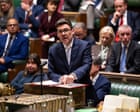
Business Secretary Signals Starmer's Imminent Resignation

Signs Point to Imminent Leadership Change
Keir Starmer's position as prime minister appears increasingly untenable following cryptic signals from Business Secretary Peter Kyle during weekend television appearances. The Business Secretary's demeanor across multiple Sunday broadcast studios suggested foreknowledge of an impending shift in UK political leadership, with reports emerging late Saturday evening indicating Starmer planned to formally announce his resignation on Monday.
The unexpected turn of events represents a dramatic reversal from Starmer's Friday statements, which had seemed dismissive of mounting pressure from his own party. Over the weekend, however, the political landscape shifted dramatically, with the prime minister apparently coming to terms with the reality of his position following consultations at Chequers and discussions with family members.
A Week of Political Upheaval
The resignation signals the latest chapter in an unprecedented period of governmental instability. British political institutions will soon welcome their seventh prime minister in just ten years—a turnover rate that far exceeds the traditional leadership changes witnessed in other established democracies. This accelerated cycle of prime ministerial transitions has fundamentally altered perceptions of British political stability on the global stage.
Observers have noted the striking contrast with international comparisons. Nations once criticized for frequent leadership changes, including Italy, now appear models of governmental continuity by comparison. The United Kingdom's current trajectory suggests a fundamental departure from historical norms surrounding prime ministerial tenure and party discipline.
Absence of Loyalist Support
One particularly telling indicator of Starmer's weakened position was the complete absence of supportive messaging from his closest political allies during the weekend speculation. Traditionally, prime ministers facing resignation rumors can rely on loyal supporters to publicly defend their position and dampen speculation about departure timelines. The lack of such defensive statements from the Starmer camp signaled that even his inner circle recognized the inevitability of leadership transition.
This silence proved more eloquent than any formal denial could have been. Political insiders interpreted the absence of loyalist intervention as tacit acknowledgment that the prime minister's tenure had effectively concluded, regardless of formal resignation announcements.
Broader Constitutional Implications
The pattern of rapid prime ministerial turnover raises significant questions about contemporary British governance structures. Institutional traditions that once provided stability through extended leadership tenures have proven insufficient to prevent the current cycle of frequent transitions. Each successive resignation or forced departure compounds existing concerns about the sustainability of the political system itself.
Constitutional experts and political analysts have begun examining whether existing mechanisms adequately serve British democratic institutions. The frequency of Keir Starmer's potential departure, coming after numerous predecessor transitions, suggests systemic challenges extending beyond individual political figures or their personal failings.
Future Uncertainties in UK Politics
Looking forward, there appears little prospect of stabilization in the immediate political climate. The trajectory established over the past decade suggests that accelerated prime ministerial changes may represent a new normal rather than temporary aberration. Each transition brings fresh uncertainty regarding government direction, policy implementation, and legislative priorities.
The mechanisms for remembering departed prime ministers—both honored and contentious—at national ceremonies like Remembrance Sunday parade will require expansion to accommodate the growing list of predecessors. The ceremonial acknowledgment of former leaders, once a relatively modest component of national observances, has become an increasingly prominent fixture.
Whether the United Kingdom can stabilize its political leadership remains an open question. The current path suggests additional transitions likely within the coming decade, perpetuating cycles of uncertainty that constrain long-term policy implementation and governance effectiveness. The Business Secretary's measured responses across weekend media appearances provided clear indication that substantial political reorganization lay immediately ahead.