Far-Right Religious Leaders Advising Trump See Iran as an End Times Holy War
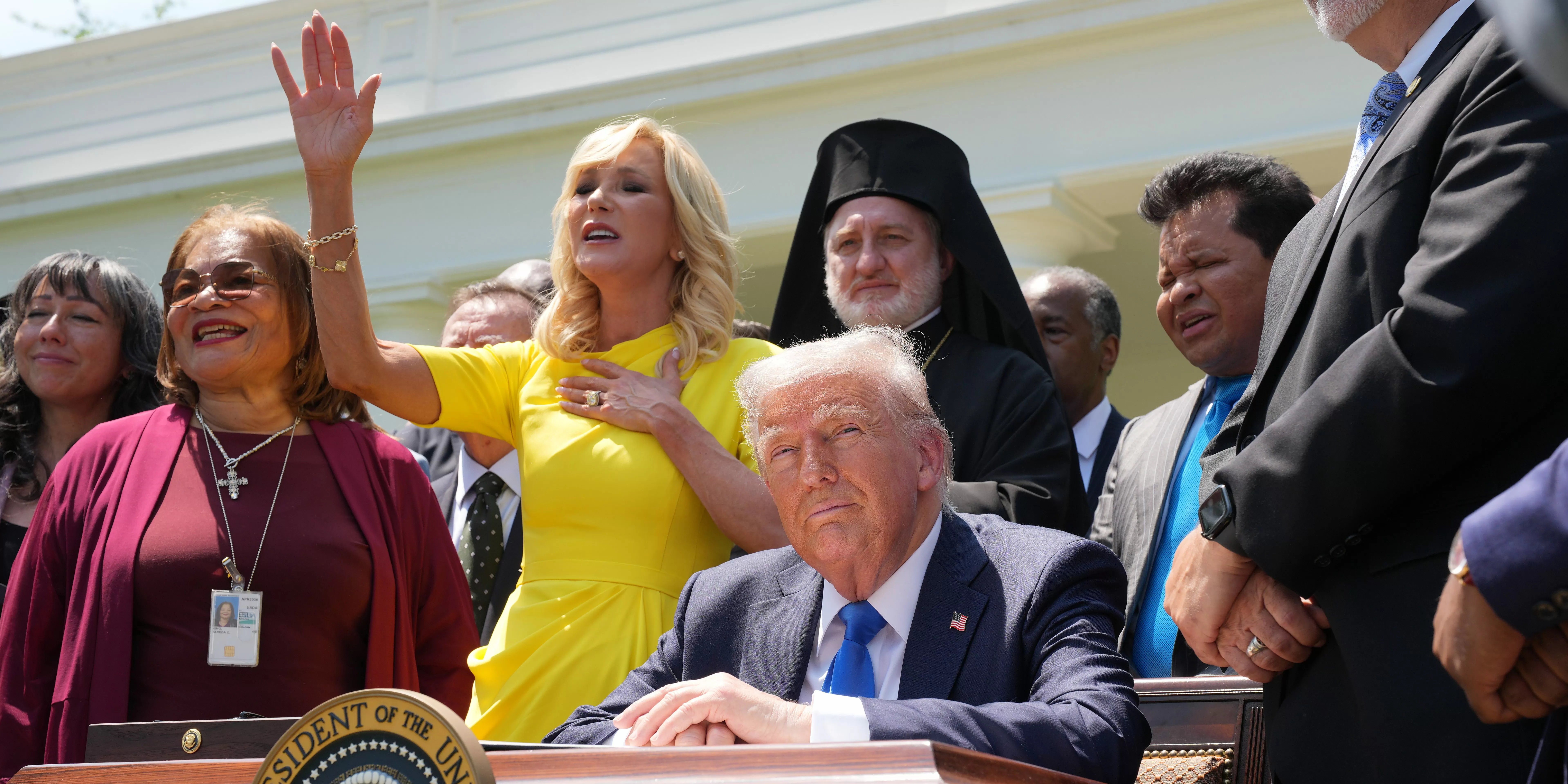
In recent years, tensions between the United States and Iran have reached a boiling point, with both countries engaging in aggressive rhetoric and actions. The Trump administration's decision to withdraw from the Iran nuclear deal and impose harsh sanctions has only served to escalate the situation. But what many people may not realize is that this conflict has taken on a dangerous religious dimension, thanks to the influence of far-right religious leaders advising President Trump.
These spiritual advisers, who are known for their extreme views and close ties to the Trump administration, see the conflict with Iran as a holy war, or crusade, against the forces of evil. This dangerous rhetoric not only fuels the flames of war, but also makes it that much more difficult to find a peaceful resolution.
One of the most influential figures in this group is Pastor John Hagee, the founder of Christians United for Israel (CUFI) and a close ally of President Trump. Hagee has long been a vocal supporter of Israel and has a history of making inflammatory statements about Iran. In a 2006 sermon, he famously declared that "the United States must join Israel in a preemptive military strike against Iran to fulfill God's plan for both Israel and the West."
Hagee's views are shared by other influential figures in the far-right religious community, such as Mike Evans, founder of the Jerusalem Prayer Team, and Robert Jeffress, a Dallas-based pastor and member of Trump's evangelical advisory board. These leaders have been vocal in their support for Trump's aggressive stance towards Iran, often using biblical references to justify their position.
But the danger of this religious crusade mentality goes beyond just rhetoric. It has real-world consequences, as seen in the recent assassination of Iranian General Qasem Soleimani. While the Trump administration has claimed that this was a necessary action to prevent future attacks, many experts believe that it was a reckless and impulsive move that could lead to further escalation and potential war.
Furthermore, the idea of a holy war against Iran ignores the complex political and historical factors at play in the region. It reduces the conflict to a simplistic good versus evil narrative, ignoring the nuances and complexities of the situation. This not only hinders efforts to find a peaceful resolution, but also demonizes an entire nation and its people.
It is important to recognize that not all Christians share these extreme views and that many religious leaders have spoken out against the dangerous rhetoric of these far-right figures. The National Council of Churches, which represents 38 Christian denominations, released a statement condemning the assassination of Soleimani and calling for peaceful solutions to the conflict.
In addition, many experts and analysts have warned about the dangers of framing the conflict with Iran as a religious war. They point out that this type of rhetoric only serves to further divide and polarize people, both domestically and internationally. It also plays into the hands of those who seek to exploit religious differences for their own gain.
As the situation with Iran continues to escalate, it is crucial that we reject the dangerous and divisive rhetoric of these far-right religious leaders. We must instead focus on finding diplomatic solutions and promoting understanding and cooperation between nations. The idea of a holy war only serves to perpetuate violence and hinder efforts towards peace.
In conclusion, the influence of far-right religious leaders advising President Trump has turned the conflict with Iran into a dangerous religious crusade. This not only fuels the flames of war, but also makes it that much more difficult to find a peaceful resolution. It is time to reject this dangerous rhetoric and work towards finding peaceful solutions to the complex issues at hand. Let us not allow religion to be used as a tool for war, but rather as a force for peace and understanding.