
Glacier Collapse Triggers Catastrophic Floods in Nepal-Tibet Border Region
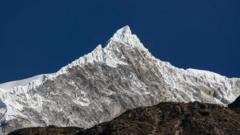
Collapsed Glacier Sparks Major Flooding Event in Nepal-Tibet Region
A collapsed glacier has emerged as the primary cause behind the catastrophic floods that devastated communities across the Nepal-Tibet border, according to preliminary findings from scientific researchers investigating the disaster. The collapsed glacier incident underscores growing concerns about the accelerating rate at which Himalayan ice formations are disintegrating due to climate change and environmental pressures.
Scientific Investigation Reveals Glacier Failure as Primary Cause
Research teams conducting field assessments have determined that structural failure of a high-altitude glacier triggered the massive water discharge that resulted in severe flooding downstream. The collapsed glacier released enormous quantities of meltwater and debris, creating a powerful surge that overwhelmed river systems and communities in its path. Scientists emphasize that this type of glacier collapse represents an increasingly common phenomenon in the Himalayan mountain range.
Climate Factors Contributing to Ice Instability
Experts attribute the glacier's failure to multiple interconnected factors related to climate change. Rising temperatures in the region have accelerated the melting process of alpine glaciers, reducing their structural integrity and stability. The collapsed glacier situation demonstrates how vulnerable these ancient ice formations have become to rapid environmental shifts occurring across the Himalayan ecosystem.
Broader Implications for Himalayan Glacier Systems
The incident highlights a critical concern for glaciologists and climate scientists worldwide: the Himalayan mountain range contains thousands of glaciers that are experiencing unprecedented rates of retreat and degradation. As global temperatures continue to rise, additional collapsed glacier scenarios may become more frequent, threatening millions of people who depend on glacier-fed rivers for water supply and irrigation.
Water Resources at Risk
The consequences extend beyond immediate flood damage. Communities throughout Nepal, Tibet, and adjacent regions rely on glacier meltwater for agriculture, drinking water, and hydroelectric power generation. The collapsed glacier event serves as a stark reminder of how climate-induced changes to ice formations can disrupt essential water systems that billions of people depend upon for survival and economic stability.
Response and Monitoring Efforts
In response to this disaster, scientific institutions have intensified their monitoring of remaining glaciers throughout the Himalayan range. Advanced satellite imagery and ground-based monitoring stations are being deployed to identify other potentially unstable ice formations before additional collapsed glacier incidents occur. Regional governments are coordinating with international research organizations to improve early warning systems.
The collapsed glacier phenomenon observed in the Nepal-Tibet region provides valuable data for understanding glacier behavior under contemporary climate conditions. Research teams will continue analyzing the structural factors that contributed to the failure, with findings expected to inform improved prediction models for future glacier stability assessments across high-altitude regions globally.


