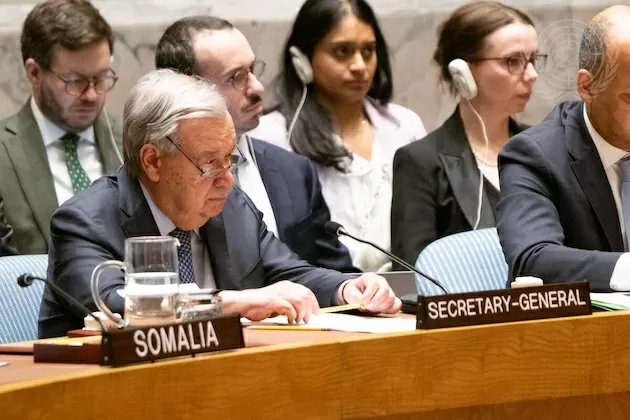
UN Leaders, Diplomats Warn of Middle East Instability Following Weekend Air-Strikes in Iran
The United States and Israel Launch Joint Military Strike on Iran, Causing Alarm for Security in the Middle East
On February 28, the world was shaken by the news of a joint military strike launched by the United States and Israel on Iran. The strike was a response to Iran's aggressive actions in the region, including their continued development of nuclear weapons and support for terrorist groups. In the aftermath of the strike, Iran retaliated with military attacks on Israeli bases and Arab Gulf states, including Bahrain, Oman, and the United Arab Emirates. This escalation of tensions has raised serious concerns about the security situation in the Middle East and the potential for a new war.
The joint military strike by the United States and Israel was a carefully planned and coordinated effort to send a strong message to Iran. For years, Iran has been a destabilizing force in the region, threatening the safety and security of its neighbors. The development of nuclear weapons and support for terrorist groups has only added to the growing threat posed by Iran. The strike was a necessary step to protect the interests of both the United States and Israel, as well as the safety of the entire Middle East region.
The strike targeted key military installations and facilities in Iran, including their nuclear facilities and missile sites. This was a strategic move to cripple Iran's ability to continue their aggressive actions and send a clear message that their actions will not be tolerated. The joint strike was successful in its mission, causing significant damage to Iran's military capabilities and sending a strong warning to the Iranian government.
However, the strike also had unintended consequences. Iran's retaliatory attacks on Israeli bases and Arab Gulf states have caused widespread alarm for the security situation in the Middle East. The attacks have resulted in casualties and damage to infrastructure, further escalating tensions in the region. The realization of a potential new war has left many in the international community deeply concerned and calling for a de-escalation of tensions.
The United States and Israel have both expressed their commitment to de-escalating the situation and finding a peaceful resolution. However, they have also made it clear that they will not back down in the face of aggression from Iran. The joint strike was a necessary measure to protect the safety and security of their citizens and allies, and they will continue to take necessary actions to ensure stability in the region.
The international community has also condemned Iran's actions and called for an end to the violence. The United Nations has urged all parties to exercise restraint and engage in dialogue to find a peaceful resolution. The European Union has also expressed its concern and called for all sides to avoid any further escalation of tensions.
The joint military strike by the United States and Israel has sent a strong message to Iran and the world that their aggressive actions will not be tolerated. It has also highlighted the need for a united front in addressing the threat posed by Iran. The safety and security of the Middle East region must be a top priority for all nations, and it is crucial that all parties work together to find a peaceful resolution.
In conclusion, the joint military strike by the United States and Israel on Iran has caused alarm for the security situation in the Middle East. While it was a necessary measure to address Iran's aggressive actions, it has also raised concerns about the potential for a new war. It is now more important than ever for all parties to engage in dialogue and work towards a peaceful resolution to ensure the safety and security of the region. Let us hope that cooler heads will prevail, and a peaceful solution can be reached.