
US Claims Multiple Nations Aided China in Circumventing Trump's Trade Barriers
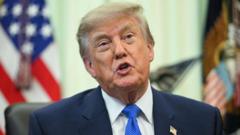
US Government Reveals Tariff Evasion Scheme Involving Multiple Nations
A comprehensive United States government report has documented how dozens of countries assisted China in circumventing Trump's tariffs by routing goods through nations with lower trade levies. This significant finding highlights a coordinated effort to undermine American trade policy and maintain supply chain advantages despite increased protective measures implemented by Washington.
The Tariff Circumvention Strategy
According to the official inquiry, China adopted a sophisticated approach to evade Trump's tariffs by strategically rerouting its merchandise through intermediate nations. Rather than shipping products directly to American markets, Chinese exporters identified countries with preferential trade agreements or lower tariff structures and used these territories as transshipment points. This systematic Trump tariffs circumvention strategy allowed goods to enter the United States under different country-of-origin designations, effectively bypassing the intended tariff consequences.
How the Trade Route System Operates
The mechanism behind this operation is relatively straightforward yet highly effective. Chinese manufacturers would export their products to partner nations, where the goods would be repackaged, relabeled, or minimally processed to qualify for lower tariff classifications. By the time these items reached American ports, their Chinese origin became obscured, allowing them to enter at significantly reduced duty rates compared to direct Chinese shipments.
Nations Implicated in the Investigation
The report identified numerous countries participating in this trade arrangement, though specific nations were highlighted for their prominent roles. These countries ranged from developing economies with limited enforcement capacity to more established trading partners seeking economic advantage through facilitating transshipment activities. The involvement of so many international participants suggests a widespread understanding of the tariff gap and the financial incentives available through tariff evasion coordination.
Economic Motivations Behind Participation
Each participating nation benefited financially from their role in the US tariff enforcement circumvention. Processing fees, re-export duties, and the economic stimulus from increased warehouse and logistical activities provided substantial revenue streams. Additionally, some countries maintained strategic relationships with Beijing that encouraged cooperation in these trade arrangements.
Impact on American Trade Policy
This revelation presents significant challenges to the Trump administration's tariff strategy, which relied on direct taxation of Chinese imports to encourage domestic manufacturing and level the playing field for American businesses. The documented Trump tariffs circumvention demonstrates that protective measures can be partially undermined through creative international logistics and cooperation among third-party nations willing to facilitate the process.
Business Community Response
American manufacturers and trade organizations have expressed concern over the effectiveness of tariff barriers when facing such sophisticated evasion techniques. The findings suggest that companies seeking to protect their market share must contend not only with direct competition but also with indirect circumvention strategies that render tariff protections less impactful than intended.
Enforcement Challenges and Future Implications
The US government faces mounting challenges in enforcing tariff compliance across complex international supply chains. Identifying goods that have been transshipped, relabeled, or minimally processed requires advanced intelligence gathering, port security improvements, and enhanced documentation requirements. The scale of the evasion network documented in the report indicates that simple enforcement approaches will prove insufficient.
Proposed Solutions
Government officials have suggested several potential responses to address international tariff avoidance practices. These include negotiating agreements with partner nations to impose stricter requirements on Chinese goods passing through their territories, implementing advanced tracking systems for goods of Chinese origin, and establishing penalties for nations that knowingly facilitate tariff circumvention. Enhanced customs procedures and stricter rules of origin determinations have also been proposed.
Broader Trade Implications
The report underscores the complexity of modern global trade and the difficulties inherent in implementing unilateral trade policies. China's ability to leverage international relationships and third-party nations to circumvent tariffs demonstrates that protectionist measures require comprehensive international cooperation to be effective. Without coordinated enforcement across multiple nations, individual countries' tariff policies can be substantially undermined.
Looking Forward
As the United States continues evaluating its trade strategy, this investigation into international tariff avoidance will likely influence future policy decisions. The involvement of dozens of countries in facilitating Chinese circumvention suggests that addressing trade imbalances requires more sophisticated approaches than simple tariff implementation. Future negotiations may increasingly focus on requiring international partners to implement compatible tariff enforcement standards and supply chain transparency measures to prevent similar evasion schemes from developing.


