
Will Human Rights Survive the Donald Trump Era?
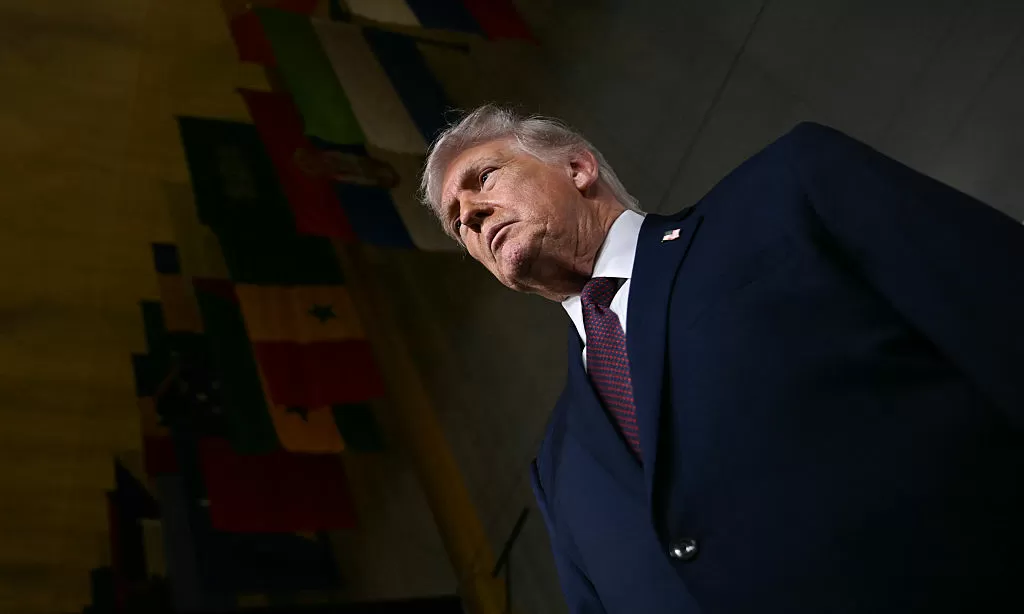
The world we live in today is facing a critical challenge - the erosion of the rules-based order that has long been the cornerstone of global stability and human rights. This is a concern that has been echoed by Philippe Bolopion, a renowned human rights advocate, who has recently highlighted the alarming trend of the decline of this order, from the United States to Russia.
The rules-based order, also known as the international rules-based system, is a set of principles and norms that govern the behavior of nations in the international arena. It is based on the idea that all states, regardless of their size or power, must abide by a set of rules and respect the sovereignty and rights of other nations. This order has been instrumental in promoting peace, stability, and human rights around the world for decades.
However, in recent years, we have witnessed a growing disregard for this order, particularly from two of the world's most influential nations - the United States and Russia. Both countries have been key players in shaping the rules-based order, but their actions in recent times have raised concerns about its future.
The United States, once a champion of human rights and democracy, has been gradually withdrawing from its role as a global leader. The current administration's "America First" approach has resulted in a shift towards isolationism and a weakening of its commitment to international institutions and agreements. This has had a significant impact on the rules-based order, as the US has been a key player in upholding and enforcing it.
The most recent example of this was the US' withdrawal from the United Nations Human Rights Council (UNHRC) in 2018. This move was met with widespread criticism, as the US has been a key member of the council since its inception in 2006. The withdrawal has been seen as a blow to the international human rights system, as the US has been a vocal advocate for human rights and has played a crucial role in addressing human rights violations around the world.
On the other hand, Russia's actions have also been a cause for concern. The country's annexation of Crimea in 2014 and its involvement in the ongoing conflict in eastern Ukraine have been seen as a violation of the rules-based order. Russia's disregard for international law and its aggressive actions have raised questions about its commitment to the principles of the order.
Moreover, Russia has also been accused of human rights violations, including crackdowns on political dissidents and restrictions on freedom of speech and the press. These actions go against the core principles of the rules-based order, which include the protection of human rights and fundamental freedoms.
The decline of the rules-based order is not just limited to these two countries. We have also seen a rise in authoritarian regimes and a growing trend of populism and nationalism around the world. These factors have contributed to the weakening of the international rules-based system, which is built on the idea of cooperation and respect for human rights.
The consequences of this decline are far-reaching and have a direct impact on the lives of people around the world. The erosion of the rules-based order means that human rights are no longer enforceable, and authoritarian regimes are given a free pass to violate the rights of their citizens without any consequences. This also poses a threat to global peace and stability, as the absence of a strong international order can lead to conflicts and instability.
It is crucial for the international community to take action to address this issue and uphold the rules-based order. This includes holding accountable those who violate international law and human rights, promoting multilateralism and cooperation, and strengthening international institutions.
As individuals, we can also play a role in upholding the rules-based order by being informed and engaged citizens, supporting organizations and initiatives that promote human rights and democracy, and holding our leaders accountable for their actions.
In conclusion, the words of Philippe Bolopion serve as a wake-up call for all of us. The rules-based order that has helped maintain global stability and protect human rights is indeed fraying fast. But it is not too late to take action and reverse this trend. Let us all work together to ensure that the rules-based order remains a cornerstone of our world, and that human rights are protected and enforced for generations to come.