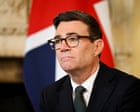
Badenoch Blasts Burnham Over Defence Spending Crisis

Badenoch Launches Sharp Critique of Government Priorities
Conservative Party leader Kemi Badenoch has launched a forceful attack on Prime Minister Andy Burnham regarding his handling of the defence spending crisis, accusing him of neglecting urgent military investment while geopolitical tensions escalate across Europe. The political confrontation centers on fundamentally different visions for national priorities, with Badenoch insisting that substantial defence spending increases are non-negotiable given current global circumstances.
In statements to major news outlets, Badenoch employed pointed language to characterize what she views as governmental inaction on defence spending. She suggested that the prime minister's approach of delaying crucial decisions represents a failure of political leadership during a period requiring decisive action and strategic clarity.
The Core Dispute: Welfare Versus Military Budgets
At the heart of this defence spending crisis lies a fundamental disagreement about government expenditure priorities. Badenoch has consistently advocated for reallocating welfare budget resources toward military capabilities and infrastructure improvements. She argues this rebalancing is essential given deteriorating security conditions on the European continent.
The Conservative leader contends that the defence spending crisis demands immediate attention and cannot be addressed through incremental approaches or administrative adjustments. Her position reflects growing concern within opposition circles about whether the current administration adequately prioritizes national security investments relative to other budgetary commitments.
Characterizing Leadership Style as Inadequate
Badenoch's rhetoric regarding the prime minister's approach to the defence spending crisis suggests she views current decision-making processes as fundamentally flawed. She indicated that while Burnham may excel at maintaining popularity, effective governance sometimes requires implementing unpopular but necessary reforms. This criticism implies that avoiding difficult choices undermines both military readiness and long-term national interests.
The accusation that leadership is being exercised through "dither and delay" represents a substantial challenge to the government's competence. Such criticism during times of security concern carries particular weight in political discourse, potentially resonating with voters anxious about international stability.
European Security Context Shaping the Debate
The backdrop for this defence spending crisis discussion involves heightened tensions affecting multiple European nations. Badenoch specifically references the risks confronting Europe as justification for her position that United Kingdom military investment cannot be deferred or minimized through budgetary maneuvers.
This geopolitical context provides particular urgency to Badenoch's arguments about defence spending priorities. She suggests that European security threats demand that national governments prioritize military modernization and capability enhancement above competing budgetary interests. The framing implies that failure to address defence spending adequately could expose Britain to strategic vulnerabilities.
Political Implications and Strategic Disagreement
The confrontation between Conservative opposition and the current administration regarding defence spending crisis matters represents substantive policy disagreement rather than mere partisan posturing. Both sides claim commitment to national security but propose fundamentally different resource allocation approaches.
The Conservative position articulated by Badenoch suggests that welfare budget examination and potential restructuring offers the most viable path toward increased defence spending without expanding overall government expenditure. This approach implies that current welfare programs contain inefficiencies or redundancies justifying reallocation toward military purposes.
Broader Questions About Government Priorities
Beyond the immediate defence spending crisis debate, Badenoch's criticism raises broader questions about how governments establish spending priorities during periods of economic and security uncertainty. Her remarks suggest that the current administration may be attempting to avoid controversial decisions that could alienate voter constituencies dependent on welfare programs.
The charge that leadership amounts to delay and avoidance rather than decisive action carries implications for public confidence in governmental competence. Political opponents frequently employ such framing to suggest that administrations lack the resolve required for effective governance during challenging periods.
Looking Forward: The Defence Spending Debate Continues
The disagreement between Badenoch and the government regarding defence spending crisis priorities appears likely to dominate political discourse during coming months. This debate will probably intensify as budgetary planning processes advance and specific allocation proposals emerge.
For the Conservative Party, maintaining focus on defence spending inadequacy offers opportunities to challenge government credibility on security matters. For the current administration, responding effectively to these criticisms while managing welfare program sustainability represents a significant political challenge during a period of heightened international uncertainty.