
Southwest France Wildfires Intensify as 40C Heatwave Looms
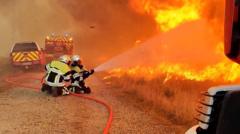
Southwest France Wildfires Face Critical Challenge
Southwest France wildfires are intensifying as meteorologists predict a dramatic temperature surge that could severely hamper firefighting operations. The Gironde region faces unprecedented pressure as emergency services prepare for the arrival of an extreme heatwave bringing temperatures up to 40 degrees Celsius. This confluence of factors threatens to overwhelm containment strategies that have been deployed across the fire-stricken areas.
Temperature Surge Threatens Firefighting Operations
Firefighters are fortifying their readiness as forecasters warn of sharply elevated temperatures expected to arrive on Wednesday. The anticipated temperature increase represents a significant complication for ongoing fire suppression efforts throughout the southwestern region. Emergency coordinators recognize that the combination of extreme heat and existing fire conditions creates a uniquely dangerous scenario that demands enhanced resource allocation and tactical adjustments.
Operational Challenges in Gironde Region
The Gironde department stands at the epicenter of these concerns, where current wildfire situations could rapidly deteriorate under elevated heat conditions. Fire officials acknowledge that higher temperatures typically accelerate fire spread, increase atmospheric dryness, and reduce the effectiveness of water-based suppression methods. The region's topography and vegetation density compound these challenges, making every degree of temperature increase a critical factor in containment success.
Preparedness Measures Being Implemented
Emergency services across southwest France have escalated their preparedness protocols in anticipation of the extreme conditions. Additional firefighting crews have been mobilized to strategic positions, and aerial support units stand ready for rapid deployment. Water resources are being pre-positioned in accessible locations to ensure continuous supply for ground operations during the anticipated peak heat period.
Coordination between regional authorities, national fire services, and disaster management agencies has intensified to ensure seamless response capabilities. Command centers have implemented enhanced communication systems to facilitate real-time decision-making as conditions evolve throughout Wednesday and beyond.
Regional Emergency Response Framework
Southwest France's emergency management structure has activated comprehensive contingency protocols designed specifically for extreme heat scenarios. Evacuation zones have been reassessed based on current fire behavior models, and vulnerable populations receive continuous updates regarding safety procedures. Local governments coordinate with medical facilities to prepare for potential heat-related emergencies alongside fire-related incidents.
The 40-degree Celsius heatwave represents an exceptional meteorological event that compounds existing wildfire pressures. Residents across the affected regions are advised to remain vigilant, follow official guidance, and prepare for possible evacuation orders. The situation developing across southwest France wildfires demonstrates the increasing intersection between climate-related extreme weather events and public safety challenges.
Outlook and Community Support
As conditions approach critical levels, community cooperation remains essential for ensuring effective emergency response. Citizens are encouraged to report unattended fires immediately and avoid activities that might inadvertently create ignition sources. The combination of southwest France wildfires and extreme temperature conditions requires collective responsibility and adherence to safety directives.
Ongoing monitoring systems track both fire progression and weather patterns to enable proactive management strategies. Meteorological updates continue hourly, allowing emergency planners to refine response tactics as the situation develops. The convergence of multiple risk factors in this region underscores the importance of sustained vigilance and coordinated action throughout the critical period ahead.


